

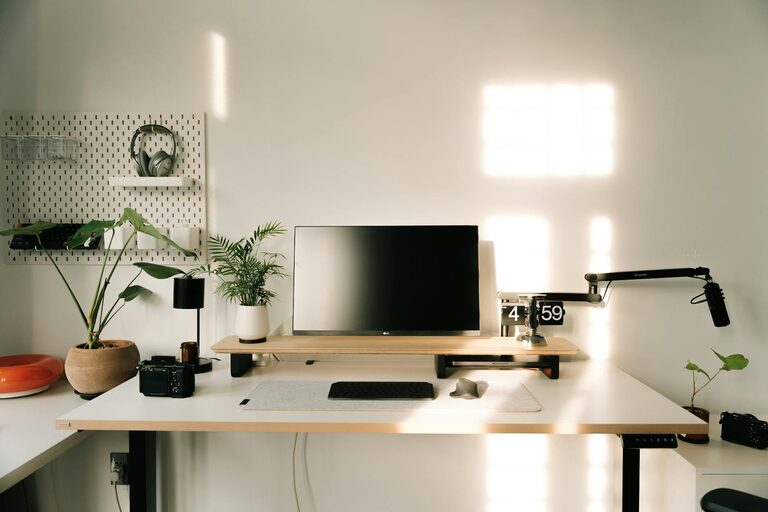
Creating a comfortable and efficient home office is essential for anyone working remotely or managing tasks from home. Striking the right balance between relaxation and productivity can improve your focus, reduce stress, and make your working hours more enjoyable. Here are some practical tips to help you set up a home office space that supports both your work goals and your well-being.
1. Choose the Right Location
Selecting the perfect spot in your home is the first step to creating an effective home office.
– Quiet and private: Look for a space away from household noise and distractions, such as a spare room, a quiet corner, or an area separated by a room divider.
– Natural light: A position near a window can boost your mood and energy levels. Natural daylight is less tiring on the eyes than artificial light.
– Space for essentials: Ensure there is enough room for your desk, chair, and storage, without feeling cramped.
2. Invest in Ergonomic Furniture
Comfort is key to maintaining focus during long working hours.
– Ergonomic chair: Choose a chair that supports your lower back and encourages good posture. Adjustable height and backrest are ideal features.
– Desk height: Your desk should allow your forearms to be parallel to the floor when typing, reducing strain on your shoulders and wrists.
– Monitor placement: Position your screen at eye level about an arm’s length away to avoid neck and eye strain.
3. Declutter and Organise
A tidy workspace promotes clear thinking and reduces stress.
– Minimalist approach: Keep only essential items on your desk to avoid distractions.
– Storage solutions: Use shelves, drawers, or organisers to store paperwork and supplies neatly.
– Cable management: Use clips or ties to keep wires organised and out of sight.
4. Use Calming Colours and Decor
The colour scheme and decor of your home office can influence your mood and productivity.
– Soothing colours: Soft blues, greens, or neutrals can create a peaceful atmosphere conducive to concentration.
– Personal touches: Add plants, artwork, or inspirational quotes that make the space inviting without overcrowding it.
– Avoid over-decorating: Keep decorations simple to maintain a professional and focussed environment.
5. Control Lighting and Reduce Glare
Good lighting helps prevent eye strain and keeps you alert.
– Layered lighting: Combine natural light with ambient light (ceiling lamps) and task lighting (desk lamps).
– Adjustable lamps: Use adjustable desk lamps to direct light where you need it most.
– Screen glare: Position screens to minimise reflections from windows or lamps.
6. Incorporate Elements to Reduce Stress
Adding relaxing elements can help you stay calm and productive.
– Plants: Indoor plants improve air quality and create a calming effect.
– Scent: Consider subtle scents like lavender or eucalyptus through diffusers, which may reduce anxiety.
– Sound: Use noise-cancelling headphones or play soft instrumental music if background noise is unavoidable.
7. Establish a Routine and Boundaries
Your environment supports your work habits as much as your schedule.
– Defined work hours: Set clear start and finish times to separate work from home life.
– Break space: If possible, set up a small area near your office to take short breaks away from your desk.
– Visual cues: Close office doors or use a “do not disturb” sign during focus periods.
8. Technology and Connectivity
Reliable technology is crucial for productivity.
– Fast internet: Ensure your workspace has a strong and stable internet connection.
– Essential accessories: Invest in a good keyboard, mouse, and webcam if needed.
– Backup solutions: Keep external drives or cloud storage ready to save your work regularly.
9. Personalise for Motivation
Your workspace should inspire and motivate you.
– Vision board: Place a board with your goals and achievements nearby.
– Daily planner: Use a calendar or to-do list visible at your desk.
– Celebrate progress: Leave space to display small reminders of your successes.
—
By following these tips, you can create a home office space that feels both relaxing and conducive to productivity. A well-thought-out environment helps you stay focused, minimise distractions, and enjoy your working hours. Remember, your home office should be a reflection of your working style and personal comfort needs, so don’t hesitate to tailor it until it feels just right.