

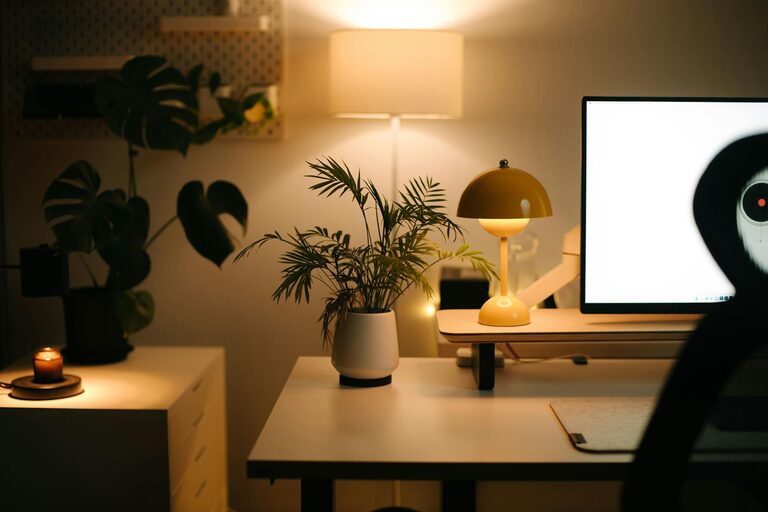
Creating a productive home office environment is increasingly important as more people work from home. A well-designed workspace can enhance focus, reduce stress, and boost overall efficiency. Whether you’re setting up a new office or looking to improve your existing one, these practical tips will help you create an environment that supports your work and wellbeing.
Choose the Right Location
Selecting the best spot for your home office is the first step. Ideally, pick a quiet area away from household traffic and distractions. If possible, use a separate room rather than a space that doubles as a relaxation area. This separation helps train your brain to switch into work mode.
Consider natural light availability when choosing your location. Natural daylight improves mood and energy, which can lead to better productivity.
Optimise Your Desk Setup
Your desk is the heart of your home office. Here are some pointers to get it right:
– Desk Size: Choose a desk large enough to hold your computer, documents, and other essentials without clutter.
– Chair Selection: Invest in an ergonomic chair that supports good posture. Adjustable height and lumbar support are ideal.
– Monitor Position: Position your screen at eye level, about an arm’s length away, to reduce neck strain.
– Desk Organisation: Use organisers or trays to keep stationery and paperwork tidy. A clutter-free desk reduces distractions.
Prioritise Ergonomics
Comfort plays a key role in maintaining productivity over long hours. To create an ergonomic workspace:
– Keep your feet flat on the floor or on a footrest.
– Maintain a 90-degree angle at your knees and elbows.
– Keep wrists straight while typing.
– Use a keyboard and mouse positioned to allow your arms to rest comfortably.
Taking these measures will help prevent aches and repetitive strain injuries.
Make the Most of Lighting
Lighting affects your energy and focus. Natural daylight is best, but if that’s limited, consider:
– Task Lighting: Use a desk lamp to illuminate paperwork without glare.
– Ambient Lighting: Soft overhead lights reduce eye strain.
– Avoid your screen facing windows directly, as glare can cause discomfort.
Adjust lighting levels depending on the time of day and the work you’re doing.
Minimise Distractions
Distractions can significantly reduce productivity. Use the following strategies to create a focused workspace:
– Sound: Consider noise-cancelling headphones or white noise machines if the surrounding environment is noisy.
– Devices: Set your phone to “Do Not Disturb” mode during work hours.
– Declutter: Keep non-work items out of sight to maintain concentration.
If you share your home with others, set clear boundaries and communicate your working hours.
Personalise Your Space
A workspace should be both functional and inviting. Small personal touches can improve mood, but avoid overcrowding the area with decorations.
Ideas include:
– Adding a plant to improve air quality and create a calming effect.
– Displaying inspirational artwork or photos.
– Using a favourite colour scheme to make the space pleasant.
Personalising your office can make you feel more comfortable and motivated.
Establish a Routine
Even with a perfect workspace, productivity depends on consistent habits:
– Set regular working hours.
– Take short breaks every hour to stretch and rest your eyes.
– Begin and end your day with a clear to-do list.
– Keep a water bottle nearby to stay hydrated.
Routine helps to maintain discipline and creates a sense of normality when working from home.
Utilise Technology Wisely
Make use of technology to enhance productivity:
– Use calendar apps and task managers to organise your schedule.
– Opt for ergonomic peripherals such as a separate keyboard and mouse.
– Ensure your internet connection is reliable and fast.
Avoid multitasking too much with multiple devices, as this can reduce effectiveness.
—
Establishing a productive home office is about combining comfort, organisation, and good habits. By selecting the right location, setting up an ergonomic workspace, managing lighting, and minimising distractions, you can create an environment that helps you work efficiently and enjoyably. Remember to personalise the space and maintain a routine that supports your productivity over the long term.